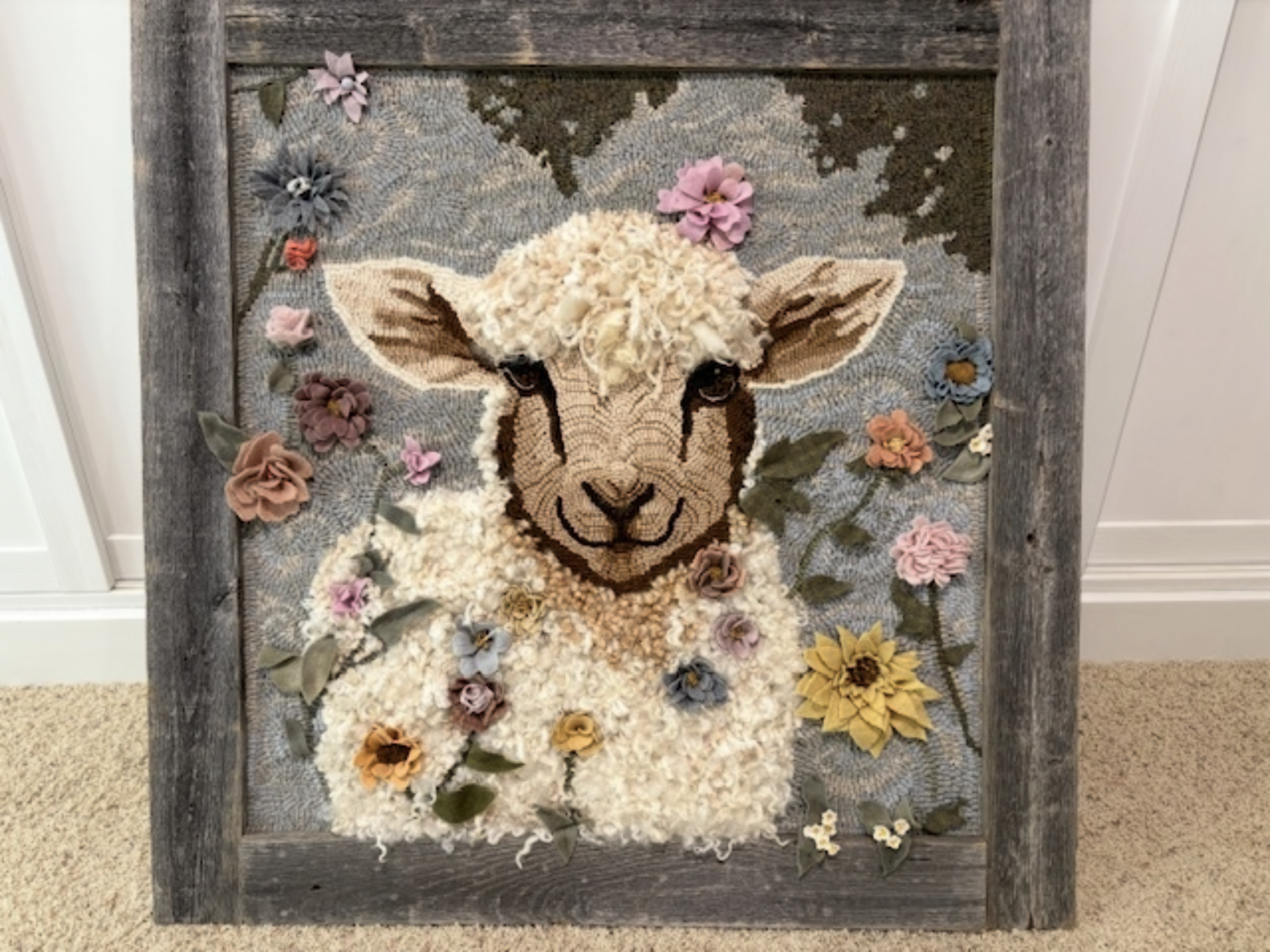

You've hooked your last loop. Now what? Finishing a rug properly is what transforms a beautiful piece of hooking or punching into a durable, heirloom-quality work you'll be proud to display or give as a gift. Here's a complete walkthrough of the finishing process, from the moment you pull your last loop to the final stitch.
Step 1: Steam and Block Your Rug
Before you do anything else, steam your finished rug. Place it face-down on a padded surface, lay a damp pressing cloth over the back, and press with a hot iron — don't drag it, just press and lift. This relaxes the loops, evens out any puckering, and sets the shape.
If your rug has curved or wavy edges, this is when to gently reshape it. Now flip it over and repeat. Let it dry completely flat before moving on.
Step 2: Trim the Excess Backing
Leave about 1–1.5 inches of backing around the entire perimeter of your hooked area. This will be folded or rolled under to create a clean edge. Cut away the rest — but don't go too close or you'll have trouble with fraying. If you have a serger this is a great use of it! Or zig zag stitch a couple of times around your project, then trim away the extras. This all helps hold it together from fraying as you work to bind it off.
Step 3: Whip or Bind the Edges
This is the step most hookers have strong opinions about, and for good reason — it's what everyone sees when they look at the edge of your rug. You have two main options:
Using Binding Tape: Some people use it and some don't. We like it, unless it's a small round project, then the pleats get to bulky. But as long as your finished piece is not a round mat smaller than 9-10 inches binding tape with whipping is a clean nice looking protective back to the edges. You simply lay the tape on the folded back edges and whip through the two layers of backing and the tape all in one step. After it is all whipped then you just go around again, basting the other edge of the binding tape down to the back of the rug.
Whipping with wool yarn: The traditional method. Roll or fold the raw edges to the back or front of the rug. Use a tapestry needle and a length of wool yarn to whip stitch around the rolled or folded edge. Keep your stitches close to cover all the linen or monks cloth backing. Our Wool Yarn Balls for Finishing are perfect for this — they're sized for the job and come in colors to match or contrast your rug. If you need the perfect yarn check out the colors with our Violet Jane yarns for the whipping the bulky rug yarn gives a larger whipped edge and the finer version gives a small finer finish.
Using a finishing kit: If you're new to finishing or want the perfect tools in one place, our Perfect Finishing Set includes what you need to get a professional result without the guesswork.
Whichever method you choose, work slowly and keep your stitches even. The edge is the frame of your rug — it deserves the same care as the hooking itself.
Step 4: Back Your Rug as a Pillow
Applying a fabric back is an easy way to create a simple pillow! Our Finishing Your Rug resource covers backing options in detail. Cut your backing fabric slightly larger than the finished piece, fold the edges under, and place the hooked piece and the pillow back together with right sides out. Now just whip of the edges just like your finishing a rug! Leave an opening on the bottom to stuff it and then whip closed. It's easy!
Step 5: Label It
Don't skip this step! Hand stitch a small label to the back with your name, the date, and the pattern name if applicable. Future generations (and future you) will thank you. A hooked rug is a significant investment of time and love — sign your work.
A Note on Blocking After Finishing
Give your rug one final steam after all finishing is complete. This helps the bound edges lie flat and ensures the whole piece looks its best. Lay it flat to dry, and it's ready to hang, display, or gift.
Ready to Finish Your Rug?
Browse our finishing supplies collection — from wool yarn for whipping to our all-in-one Perfect Finishing Set — and give your hooked rug the ending it deserves.